
Optimizing OnlyFans Discovery Without Native Search Tools
OnlyFans does not offer a search bar, a category browser, or a recommendation feed, and that absence is deliberate. The platform is built as a hosting and billing layer for creators who bring their own audiences, so finding someone new means building your own discovery process instead of typing a keyword into official search. BestOnlyFans and similar ranking sites exist precisely because that gap is real, but treating any single external list as an answer is how people end up paying for pages they never revisit.
This guide treats the missing search function as a design feature rather than an oversight. Once you understand why the platform is structured this way, external tools stop looking like random directories and start looking like pieces of a workflow you assemble yourself.

Why OnlyFans Intentionally Lacks Discovery Features
The core reason is traffic ownership. Creators are responsible for bringing their own subscribers, usually from social platforms where they already have an audience. An algorithmic recommendation feed would redistribute attention the platform did not generate, changing the entire economics of the site.
There is also a compliance dimension. Keeping discovery off-platform pushes that judgment to third parties, which limits the platform’s exposure and keeps the content catalog decentralized.
For subscribers, the consequences are straightforward. There is no way to browse by niche inside the site, no “similar creators” panel, and no way to see what a page contains before you land on it.
What This Means for Subscriber Behavior
Sophisticated users collect candidate names from social platforms, check whether a page still exists, and read whatever independent commentary they can find before committing money. That process is slower, but it filters out a large share of dead pages, abandoned accounts, and mismatched expectations.
A simple list of creators you have evaluated, with notes on why you skipped them, is more useful than any one-off directory visit.

As the creator count expanded, the odds of finding a good match by accident dropped sharply, and the value of structured external information rose with it.

Ranking Site Methodologies and Their Limitations
The ordering is a convenience, not a verdict, and understanding how it is produced tells you when to trust it and when to look further. The table below breaks down the most common metrics and what they actually capture.
| Ranking Signal | What It Actually Measures | Critical Interpretation |
|---|---|---|
| Follower count | Popularity proxy, accumulated over time | Says nothing about engagement quality or posting frequency |
| Subscription price | Positioning choice made by the creator | No value signal without knowing content volume and update rate |
| Review score | Subjective satisfaction from whoever submitted | Usually unverified; a single campaign can shift an average |
| Category rank | Standing within a niche label | Does not indicate absolute audience size or staying power |
None of these signals is useless. A page with a modest follower count and a $7 subscription can outperform a heavily ranked account on consistency and responsiveness.
- Self-reported creator metrics, which often have verification gaps
- Price scraping, which frequently misses promotional first-month rates
- Social follower counts, captured without engagement rate context
- Manual review submissions, which carry selection bias toward strong opinions
- Affiliate link tracking, which introduces a recommendation incentive
That last point deserves emphasis. When a ranking site earns commission on referrals, placement can be influenced by payout terms rather than quality. That does not make the list fraudulent, but it means you should read position as one input among several. BestOnlyFans and comparable directories publish methodology notes precisely because this ambiguity is well known in the space.
Treat ranking position as a starting point for research, never as a conclusion. Before subscribing, confirm the page is active, check the last post date, and verify the listed price against the subscription page itself.
Social Platform Signals and Cross-Reference Verification
Most creators maintain a presence on at least one social platform, and that presence is usually more informative than any aggregated ranking. Posting rhythm, tone, and how they handle replies all transfer to the paid experience.
Run these five steps before you spend anything:
- Confirm posting consistency across platforms matches what the profile claims
- Check that the content style in public teasers aligns with the implied paid content
- Review interaction patterns for authentic replies versus bot-driven engagement
- Identify time zone and schedule regularity from post timestamps
- Cross-reference price positioning against demonstrated content quality
Typical paid subscriptions run between $4.99 and $15, with many clustering in the $5 to $10 band. A page charging $25 needs a visible reason, and if public material does not support that positioning, the signal is worth noting. The full paid range runs from $4.99 at the minimum to $49.99 at the maximum.
Community Intelligence and Review Aggregation Tactics
Unofficial review communities are the messiest information source available, and also sometimes the most candid. Because they are largely unmoderated, both genuine feedback and coordinated manipulation appear side by side.
- Repetitive phrasing that suggests copy-paste campaigns across multiple threads
- Extreme ratings with no specific detail about what was actually delivered
- Accounts whose entire history is adult-content commentary
- Timing clusters around promotional periods or price changes
- Negative reviews citing issues that contradict how platform billing actually works
Cross-referencing helps more than reading volume. One detailed review that mentions specific update frequency carries more weight than twenty identical praise posts.
Remember that disappointed subscribers post more often than satisfied ones. A quiet creator with few reviews is not necessarily a poor choice; the sample size may simply be small. For a broader framing of how these communities form and what they measure, it helps to see how the best onlyfans login tools approach creator data, because methodology disclosure is one of the few ways to judge whether an aggregator is doing real work or recycling affiliate links.
Direct Creator Evaluation Before Financial Commitment
By the time you reach a profile page, you should already have a shortlist. What remains is extracting the maximum information from what the page shows publicly before any payment.
- Media count and post frequency relative to the stated subscription price
- Pinned post clarity about content boundaries and what is included
- Tip menu or PPV pricing transparency, if published
- Bio specificity, which separates real pages from vague placeholders
- Free content volume, which demonstrates actual production capacity
Free pages set their subscription price to $0 and earn through pay-per-view messages and tips instead. That structure lets you observe output and communication style at no cost, which makes free pages a genuinely useful evaluation step rather than a lesser tier.

Know the exit before you enter. Auto-renew can be switched off at any time, and your access continues until the paid period ends. If a creator raises the base price, auto-renew stops automatically rather than charging the new amount, which removes one common source of billing surprises.

A card verification hold of $0.10 is standard and refunded within days, while pay-per-view unlocks run up to $50 and paid chat messages commonly run $3 to $5 each. Tips can reach $100. Knowing these numbers in advance makes it easier to spot a page whose public claims do not match platform mechanics.
Building Repeatable Discovery Workflows
Ad hoc searching produces inconsistent results. A repeatable workflow produces a shortlist you can actually evaluate, and it survives the disappearance of any single source.
- Scheduled ranking site reviews using the same criteria each time
- Social platform monitoring lists for candidate creators you have not yet evaluated
- A cooling-off period between discovery and subscription
- A documentation template that tracks the factors you care about
- Quarterly archive reviews to revisit dormant but still interesting creators
A day between finding a page and subscribing removes most impulse decisions and costs nothing.
Documentation is the other half. Notes on update frequency, response time, and whether the content matched the teasers are what make your next decision faster.
Privacy Considerations in External Discovery Channels
Discovery activity happens outside the platform, which means it creates traces the platform itself never sees. Social accounts, forum history, and browser data all accumulate independently of your subscription record.
| Discovery Channel | Privacy Exposure | Mitigation Tactic |
|---|---|---|
| Social platform following lists | Publicly reveals interest patterns | Use a separate account for research activity |
| Community forum account history | Long-term post trail in adult communities | Keep a dedicated handle that shares no details with other accounts |
| Browser cookies on ranking sites | Cross-site tracking of visited pages | Use a separate browser profile or clear data after sessions |
| Email registration for site notifications | Links your identity to an adult-content service | Use a dedicated address with no connection to your primary email |
Compartmentalization is the practical principle. A research identity that shares no username, email, or profile photo with your main accounts limits the damage from any single data exposure.

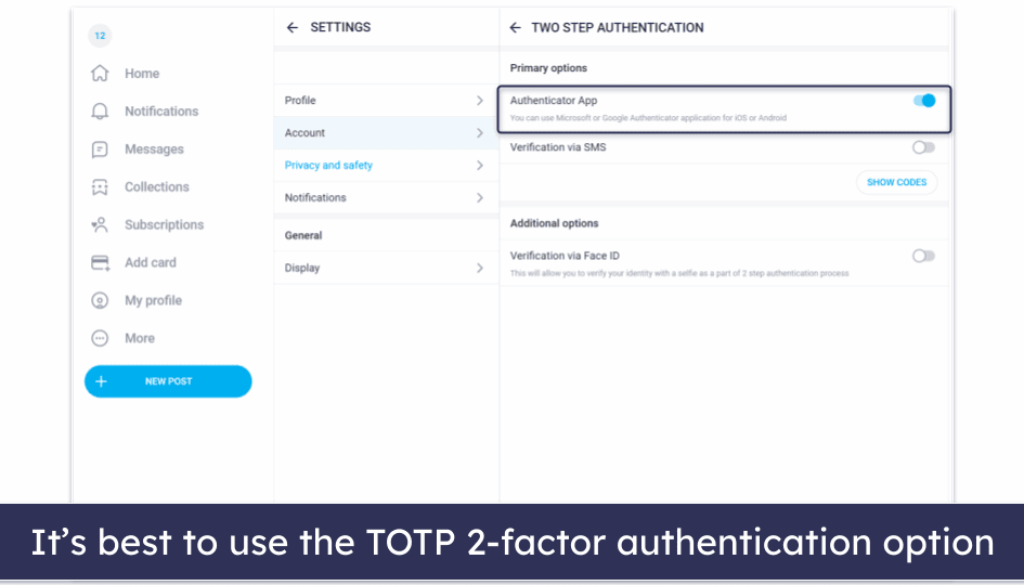
Credential stuffing attacks target adult platforms specifically because account recovery is often embarrassing to pursue, and a stolen session exposes your subscription list and payment history.
Passwords should be unique across every channel you use for discovery, not just the platform itself. Reusing one password across a forum, a ranking site, and the platform connects all three the moment any one of them leaks.

The platform takes 20% of everything and the creator keeps 80%, which means every dollar you spend reaches the person producing the content minus that fee. Pages with transparent pricing and steady output tend to reflect that structure honestly, while pages that promise far more than their price point supports usually do not.
FAQ
Why doesn’t OnlyFans add a search feature like other platforms?
Creators bring their own audiences from social channels, so a built-in directory would redistribute attention the platform did not create and introduce editorial decisions about which accounts get surfaced.
How often do BestOnlyFans rankings update their price data?
Because promotional first months can sit below $4.99 while base prices must stay at or above that floor, ranking listings sometimes show a discounted rate that no longer applies.
Can creators pay to improve their ranking position?
Some directories monetize through affiliate commissions, which creates an incentive to place high-earning referrals prominently. Paid placement is not universal, but because it is rarely labeled clearly, treat any ranking position as one data point rather than an independent quality assessment.
Is it safe to use the same email for ranking sites and OnlyFans?
It is better to separate them. A shared address links your research activity to your subscription account, and if either service suffers a breach, the connection is exposed. Use a dedicated address for discovery channels and keep your platform login tied to something you control.